Reinforcement Steel Calculator: Mastering Rebar Weights & Formulas
In the discipline of structural engineering and civil construction, the successful execution of any "dream place" depends on the synergistic relationship between concrete and steel[cite: 1]. While concrete provides exceptional compressive strength, it is relatively weak in tension; Reinforced Cement Concrete (RCC) solves this by embedding steel reinforcement bars—commonly known as rebar—to counteract tensile stresses and prevent structural failure[cite: 1].
Accurate reinforcement estimation is the fundamental foundation of project profitability and structural safety[cite: 1]. Errors in rebar calculations lead to "price uncertainty," expensive mid-job shortages that can stand a crew idle, or significant over-ordering that wastes high-value material[cite: 1]. A Reinforcement Steel Calculator is a technical tool that bridges the gap between engineering drawings and physical procurement[cite: 1].
What Is a Reinforcement Steel Calculator?
A reinforcement steel calculator is a systematic methodology or digital tool used to predict the physical mass (in kilograms or tonnes) and total length of steel required for a project[cite: 1]. These tools translate architectural bar schedules into procurement lists by considering bar diameter, length, number of units, and necessary overlaps known as lap lengths[cite: 1].
What Is Reinforcement Steel (Rebar)?
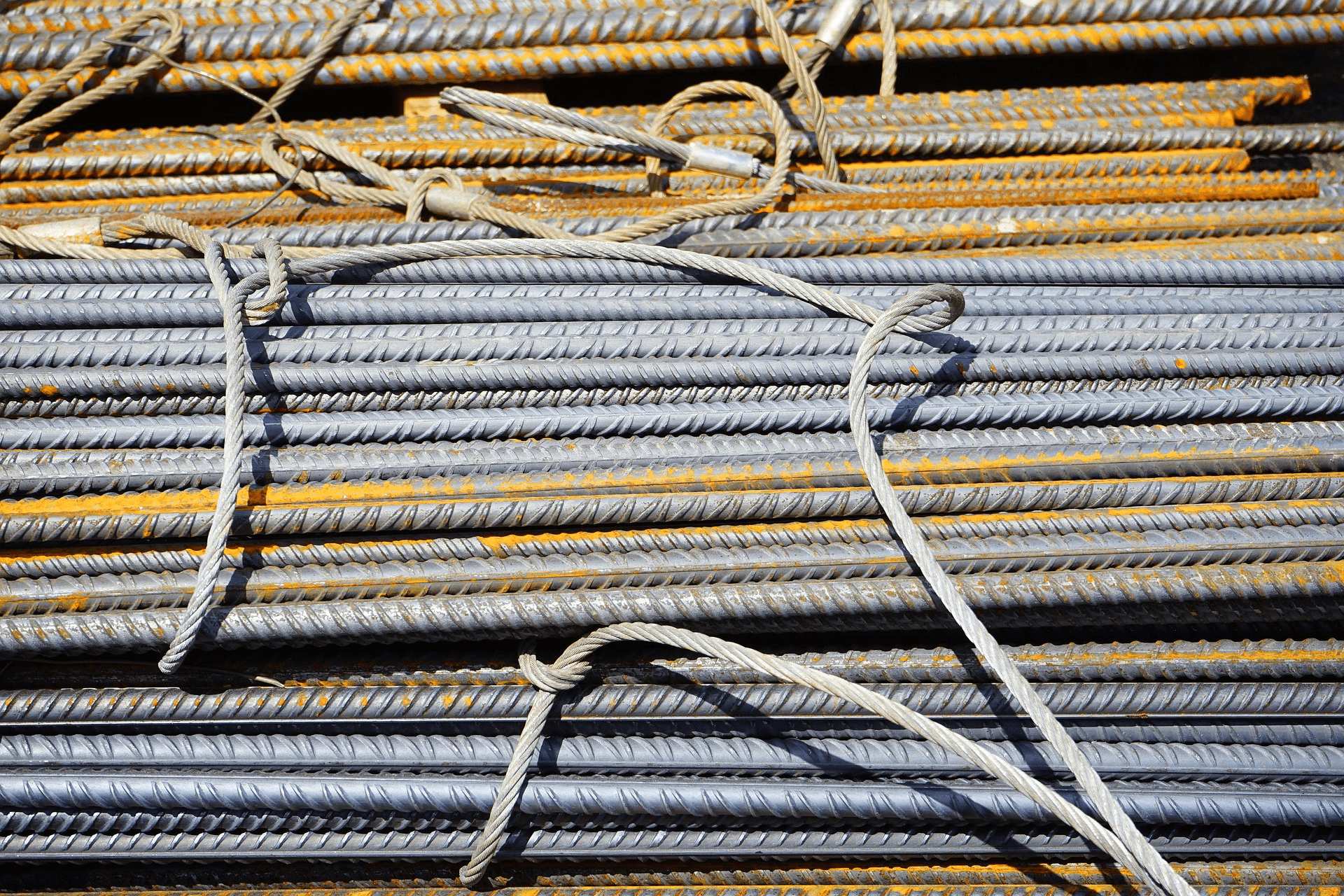
Reinforcement steel is typically comprised of hot-rolled carbon steel or specialized alloys[cite: 1]. It is most frequently produced as circular bars with surface deformations (ribs) that improve the mechanical bondage between the steel and the surrounding concrete[cite: 1]. While steel is the industry standard, modern construction may occasionally utilize polymers or alternate composite materials depending on the specific environmental requirements of the site[cite: 1].
How Reinforcement Steel Is Used in Concrete Construction
Rebar is used to create "skeletons" within concrete forms before the viscous fluid is poured[cite: 1]. The various elements of RCC construction include[cite: 1]:
- Footings: Providing a stable base for the structure to prevent "future settlement"[cite: 1].
- Columns: Vertical members that handle heavy compressive and bending loads[cite: 1].
- Beams: Horizontal members that transfer floor or roof loads to columns[cite: 1].
- Slabs: Flat horizontal surfaces for floors and roofs[cite: 1].
Common Types and Sizes of Reinforcement Bars
Estimators identify rebar by its nominal diameter, which dictates its weight and structural capacity[cite: 1]. Standard diameters commonly used in construction include[cite: 1]:
- Small Diameters (8mm, 10mm): Typically used for stirrups, ties, and temperature reinforcement in slabs[cite: 1].
- Medium Diameters (12mm, 16mm, 20mm): Standard for residential and commercial beams and columns[cite: 1].
- Large Diameters (25mm, 32mm, 40mm+): Reserved for heavy-duty industrial foundations, bridges, and infrastructure[cite: 1].
Understanding Rebar Diameter, Length, and Weight
The mass of rebar is directly proportional to its cross-sectional area and the density of steel, which is standardly estimated at 7,850 kg/m³[cite: 1]. Because steel is sold by weight, but designers specify by length and diameter, the conversion between these units is the most critical variable in any bid[cite: 1].
The Reinforcement Steel Weight Formula: D²/162
In the field, professionals utilize a well-known engineering shortcut to find the weight of a bar per unit of length[cite: 1].
The Established Formula (Metric)
Formula:
Weight (kg/m) = D² ÷ 162 (Where D is the nominal diameter of the bar in millimeters)[cite: 1].
How it works: This formula is derived from the circular cross-sectional area (π/4 × D²) multiplied by the density of steel (7,850 kg/m³)[cite: 1].
Worked Example: Calculating a Single Bar Weight
Scenario: Determine the weight of a 16mm diameter bar that is 12 meters long[cite: 1].
- Find kg/m: 16 × 16 ÷ 162 ≈ 1.58 kg/m[cite: 1].
- Find Total Weight: 1.58 kg/m × 12 meters ≈ 18.96 kg[cite: 1].
Calculating the Number of Rebars Required
To determine the quantity of pieces needed for a structural member, estimators look at the clear span and the spacing specified in the plans[cite: 1].
The Spacing Formula
Formula:
Number of Bars = (Total Length / Spacing) + 1[cite: 1]
(The "+1" is critical to account for the "starter" bar at the beginning of the run)[cite: 1].
Estimating for Different Structural Members
Slabs and Footings
For a standard slab, rebar is laid in a grid pattern[cite: 1]. Estimators must calculate the number of bars required for the lengthwise run and the widthwise run separately, then sum them to find the total quantity[cite: 1].
Beams and Columns
These elements utilize longitudinal bars (main reinforcement) and transverse reinforcement (stirrups or ties)[cite: 1].
- Stirrups: Calculated by determining the total perimeter of the stirrup (accounting for concrete cover) and multiplying by the number of stirrups required along the beam's length[cite: 1].
Accounting for Cutting, Lapping, and Waste
Mathematical formulas assume a "perfect" geometric world, but site conditions and material lengths require a wastage margin[cite: 1].
- Lap Length: Because rebar is typically manufactured in standard lengths (e.g., 12m or 40ft), bars must be overlapped to ensure continuity of strength[cite: 1]. A common industry assumption is a lap length of 40 to 50 times the diameter of the bar[cite: 1].
- Cutting Waste: Offcuts created when trimming bars to fit specific spans[cite: 1].
- Standard Buffer: Professionals typically add 5% to 10% to their total weight estimate to cover these real-world losses[cite: 1].
Worked Example: Estimating Slabs
Scenario (Assumptions):
- Slab Dimensions: 10m × 10m[cite: 1]
- Rebar Diameter: 12mm[cite: 1]
- Spacing: 200mm (0.2m) center-to-center, both ways[cite: 1]
- Waste Factor: 10%[cite: 1]
- Calculate Number of Bars (one way): (10 ÷ 0.2) + 1 = 51 bars[cite: 1].
- Calculate Total Length (both ways): 51 bars × 10m × 2 = 1,020 meters[cite: 1].
- Find Unit Weight (12mm): 12² ÷ 162 = 0.888 kg/m[cite: 1].
- Find Total Base Weight: 1,020m × 0.888 kg/m = 905.76 kg[cite: 1].
- Apply Waste Factor: 905.76 × 1.10 = 996.34 kg[cite: 1].
- Final Order: Approximately 1.0 Tonne[cite: 1].
Common Reinforcement Steel Calculation Mistakes
- Mixing Units: Calculating diameter in millimeters but length in feet results in "massive estimation errors"[cite: 1].
- Ignoring Concrete Cover: Measuring the full width of a beam for rebar without deducting the 25mm–50mm of concrete cover on each side results in bars that will not fit the forms[cite: 1].
- Neglecting Lap Length: Failing to account for overlaps can lead to a material shortage of 10% or more on large spans[cite: 1].
- Confusing Ton vs. Tonne: A US Short Ton (2,000 lbs) is lighter than a Metric Tonne (1,000 kg), leading to a 10% error if units are not standardized[cite: 1].
Practical Tips for Accurate Estimates
- Verify with Mill Certificates: For final bidding, use the specific gravity or weight per meter provided by the material supplier, as nominal dimensions can vary slightly[cite: 1].
- Use Digital Tools: Utilizing a digital Rebar Weight Calculator or AI Estimation from drawings reduces arithmetic risk and provides a defensible baseline for bidding[cite: 1].
- Thumb Rule for Budgets: In early residential planning, some estimators use a "thumb rule" of 4 kg of steel per square foot of built-up area[cite: 1].
Key Takeaways
- D²/162 is the foundational formula for weight per meter in kg[cite: 1].
- 7,850 kg/m³ is the reliable density benchmark for steel[cite: 1].
- Always add 5-10% for waste and lapping to prevent work stoppages[cite: 1].
- Precision in quantity takeoffs protects profit margins and ensures structural integrity[cite: 1].
Engineering Reference Appendix
A. Established Formulas
- Weight (kg/m): D² ÷ 162[cite: 1]
- Number of Units: (Total Length ÷ Spacing) + 1[cite: 1]
- Total Weight: Total Length (m) × Unit Weight (kg/m)[cite: 1]
- Steel Rebar Area: (π × D²) ÷ 4[cite: 1]
B. Values from Authoritative References
- Standard Steel Density: 7,850 kg/m³ (approx. 490 lb/ft³)[cite: 1]
- Unit Weight (8mm): 0.395 kg/m[cite: 1]
- Unit Weight (12mm): 0.888 kg/m[cite: 1]
- Unit Weight (16mm): 1.578 kg/m[cite: 1]
- Standard Unit: 1 Metric Tonne = 1,000 kg[cite: 1]
C. Example Assumptions
- Wastage Factor: 5% for general construction; 10% for complex reinforcement schedules[cite: 1]
- Lap Length: 40 to 50 times the bar diameter[cite: 1]
- Concrete Cover: 40mm for footings; 25mm for slabs[cite: 1]
D. Project-Specific Values
- Steel Grade: (e.g., Grade 60 or 500 MPa) which must be taken from the structural specifications[cite: 1].
- Bar Schedule: The exact number and length of "bar marks" must come from the structural drawings for final procurement[cite: 1].
Professional Disclaimer: Reinforcement calculator results and these guidelines are intended for general planning and estimation purposes only[cite: 1]. Actual structural requirements, material grades, and load-bearing capacities must be verified by a licensed structural engineer and must comply with local building codes[cite: 1]. Always consult with a professional estimator or structural specialist before placing final material orders[cite: 1].
Reinforcement Steel Calculator:
This reinforcement steel calculator helps you figure the weight, length, and cost of rebar for concrete construction. Enter your rebar size, length, and quantity — get results in pounds, total length, and cost.
⚙️ Quick Formula:
Weight = Quantity × Length × Weight per ft
Weight per ft = (Diameter in inches)² × 0.7854 × 0.283 × 12
Example: 10 bars of #4 (1/2") rebar, 20ft each
Weight per ft = 0.668 lbs/ft
Total Weight = 10 × 20 × 0.668 = 133.6 lbs
Understanding Rebar Sizes
Rebar (reinforcement steel) is sized by number, which corresponds to the diameter in 1/8 inch increments:
- #3: 3/8" diameter — light applications
- #4: 1/2" diameter — residential slabs, footings
- #5: 5/8" diameter — commercial slabs, beams
- #6: 3/4" diameter — columns, heavy structures
- #8: 1" diameter — bridges, heavy commercial
- #10: 1-1/4" diameter — heavy industrial, dams
Rebar Weight per Foot Table
- #3: 0.376 lbs/ft
- #4: 0.668 lbs/ft
- #5: 1.043 lbs/ft
- #6: 1.502 lbs/ft
- #7: 2.044 lbs/ft
- #8: 2.670 lbs/ft
- #9: 3.400 lbs/ft
- #10: 4.303 lbs/ft
- #11: 5.313 lbs/ft
Real-World Rebar Examples
- Slab (20' × 30' with #4 @ 16" spacing): ~200 bars × 20ft = 2,672 lbs
- Footing (10' × 10' with #5): ~12 bars × 10ft = 125 lbs
- Column (12ft tall with #6 vertical bars): 4 bars × 12ft × 1.502 = 72 lbs
- Retaining wall (50ft long with #4 horizontal): 50 bars × 20ft = 668 lbs
📋 Real Project: Slab Reinforcement
Project: Concrete slab reinforcement, Austin, TX | Size: 24' × 36' | Rebar: #4 @ 16" spacing
📐 Calculations:
Length direction: 24' ÷ 1.33' = 18 bars × 36' = 648 ft
Width direction: 36' ÷ 1.33' = 27 bars × 24' = 648 ft
Total length: 1,296 ft
Weight: 1,296 × 0.668 = 866 lbs
Cost @ $0.60/lb: 866 × $0.60 = $520
Add 10% waste: 953 lbs → $572
5 Common Rebar Calculation Mistakes
- Using the wrong weight per foot: Different sizes have different weights — check the size.
- Forgetting to add waste: Add 5-10% for laps, splices, and cutting waste.
- Not accounting for laps: Rebar laps add extra length — typically 40-50 times the diameter.
- Mixing imperial and metric: Keep all measurements in feet or inches.
- Ignoring spacing requirements: Check code for minimum and maximum spacing.
🔧 Rebar Troubleshooting
Common rebar estimation problems and solutions.
❌ "My rebar order was too short"
→ You likely forgot to add waste or account for laps. Always add 10% extra for rebar projects.
❌ "The rebar is heavier than expected"
→ Check the rebar size. #5 is much heavier than #4. Use the correct weight per foot for your size.
❌ "My rebar cost is higher than expected"
→ Rebar prices vary by region and size. Get multiple quotes from suppliers. Larger sizes cost more per pound.
Frequently Asked Questions
How do I calculate rebar weight?➕
Weight = Number of bars × Length × Weight per foot. For #4 rebar, weight per foot is 0.668 lbs/ft. Example: 10 bars × 20ft × 0.668 = 133.6 lbs.
What is the weight of #4 rebar per foot?➕
#4 rebar (1/2" diameter) weighs 0.668 pounds per foot. A 20ft stick weighs 13.36 lbs.
How much rebar do I need for a slab?➕
Determine spacing, then calculate number of bars in each direction. For a 20' × 30' slab with #4 @ 16" spacing: ~45 bars × 20ft = 900 ft of rebar.
What is the lap length for rebar?➕
Lap length is typically 40-50 times the bar diameter. For #4 (1/2"), lap is about 20-25 inches. Check local building codes for requirements.
How much does rebar cost per pound?➕
Rebar typically costs $0.50-$0.80 per pound, depending on size and region. Larger sizes and higher grades cost more.