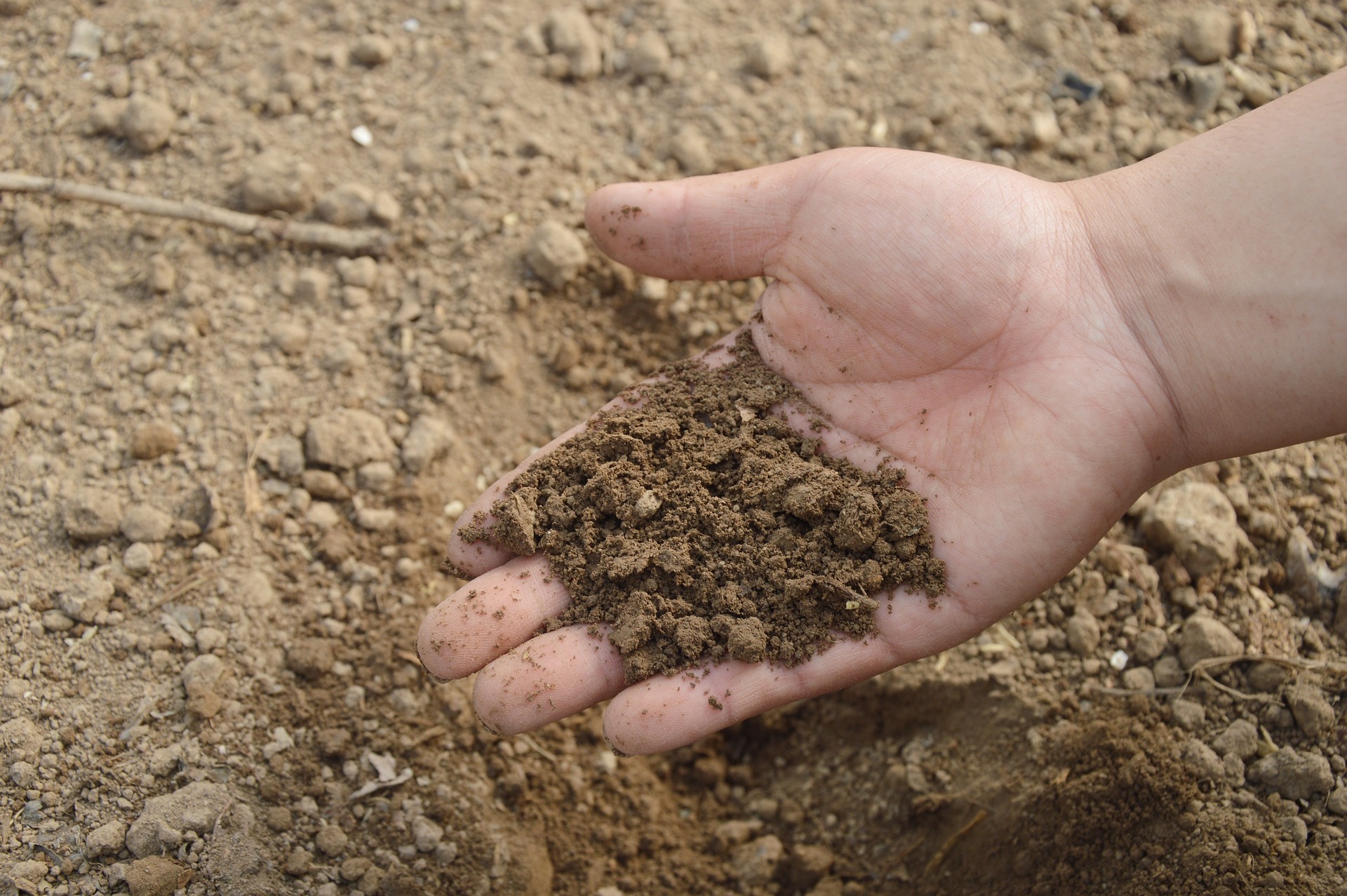
In the field of civil engineering and site development, topsoil refers to the uppermost layer of soil, typically rich in organic matter and essential for finishing any "dream place" construction or landscaping project. Whether you are a property manager fixing grading issues or a contractor installing a new lawn, topsoil is the primary material used to rebuild structure, improve drainage, and support healthy plant growth.
Accurate estimation of topsoil is the "fundamental foundation" of project planning. Errors in these calculations lead to "price uncertainty," expensive mid-job material shortages, or significant logistical waste. This guide details the technical requirements for determining topsoil quantities precisely using engineering-grade formulas and site-proven methods.
Topsoil is the outer layer of the earth's crust, usually the top 2 to 8 inches, which contains the highest concentration of organic matter and microorganisms. In a construction context, it is the "finishing material" applied over the subsoil to provide a stable, nutrient-rich environment for turf or gardens. It is distinct from fill dirt, which is typically used for bulk structural grading rather than supporting plant life.
The required depth of topsoil depends on the existing site conditions and the type of vegetation being planted.
The accuracy of any estimate begins with precise site measurements.
Once the surface area and design thickness are established, you must determine the three-dimensional volume the material will occupy.
Consistency in units is mandatory to avoid "massive estimation errors". Most suppliers sell bulk topsoil by the cubic yard or the tonne.
Unlike rigid materials, soil weight is highly variable. The "bulk density" of topsoil products fluctuates based on aggregate composition and moisture content.
Mathematical formulas represent a "perfect" geometric world, but soil is particulate and will settle over time.
Topsoil Calculator Square Feet:
This topsoil calculator helps you figure exactly how much topsoil you need for gardening, landscaping, and lawn projects. Enter your dimensions and depth — get results in cubic yards, cubic feet, tons, and cost.
🌱 Quick Formula: Cubic Yards = (Length × Width × Depth) ÷ 27
Example: Garden bed 20' × 10' with 4" depth
Volume = 20 × 10 × (4/12) = 66.67 ft³ ÷ 27 = 2.47 cubic yards
How Much Topsoil Do You Need?
Topsoil depth varies by project type. Here are general recommendations:
- Lawn topdressing: 2-3 inches (5-7.5 cm)
- New lawn / seeding: 3-4 inches (7.5-10 cm)
- Garden beds: 4-6 inches (10-15 cm)
- Raised beds: 6-12 inches (15-30 cm)
- Landscaping / grading: 2-6 inches depending on use
Real-World Project Examples
- Small garden bed (10' × 5', 4" depth): 0.62 yd³ → ~$28 + delivery
- Medium lawn (30' × 20', 3" depth): 5.56 yd³ → ~$250 + delivery
- Large raised bed (12' × 4', 10" depth): 1.48 yd³ → ~$67 + delivery
- Full yard landscaping (50' × 40', 6" depth): 37.04 yd³ → ~$1,665 + delivery
📋 Real Project: Backyard Lawn Installation
Project: New lawn installation, Portland, OR | Size: 40' × 25' (1,000 sq ft)
📐 Calculations:
Area: 40' × 25' = 1,000 sq ft
Depth: 4 inches (0.333 ft)
Volume: 1,000 × 0.333 = 333 ft³ ÷ 27 = 12.3 yd³
Weight: 12.3 × 1.3 tons = 16 tons
Cost: 12.3 × $45 = $554 + $75 delivery = $629 total
5 Common Topsoil Calculation Mistakes
- Mixing units: Convert all measurements to the same unit (feet, inches, or meters).
- Forgetting to convert depth: Depth in inches must be divided by 12 for feet.
- Not accounting for settling: Topsoil settles 5-10% — order extra.
- Ignoring weight limits: Topsoil weighs ~1.3 tons per cubic yard — check truck capacity.
- Underestimating area: Always measure irregular areas carefully.
🔧 Topsoil Troubleshooting
Common topsoil estimation problems and solutions.
❌ "My topsoil order was too much or too little"
→ Double-check your area measurements and depth. Use the calculator above to verify. Add 10% for settling.
❌ "The topsoil was more expensive than expected"
→ Compare prices from multiple suppliers. Ask about bulk discounts for orders over 5-10 cubic yards.
❌ "My truck couldn't carry all the topsoil"
→ A standard pickup truck holds about 1-2 cubic yards. Larger dump trucks hold 5-10 cubic yards. Plan delivery accordingly.
Frequently Asked Questions
How many cubic yards of topsoil do I need?➕
Multiply your area (sq ft) by the depth in feet, then divide by 27. For a 100 sq ft area with 4" depth: 100 × 0.333 ÷ 27 = 1.23 cubic yards.
How much does a cubic yard of topsoil weigh?➕
A cubic yard of topsoil weighs approximately 1.2 to 1.5 tons (2,400-3,000 lbs) depending on moisture content and composition.
What is the cost of topsoil per cubic yard?➕
Topsoil costs typically range from $30-$60 per cubic yard, depending on quality and region. Delivery adds $50-$150 per load.
How deep should topsoil be for a garden?➕
Most garden beds need 4-6 inches of topsoil. Vegetables and deep-rooted plants may need 8-12 inches. Lawns typically need 3-4 inches.
Can I use topsoil for filling low spots?➕
Yes, topsoil is excellent for filling low spots in lawns. Use 2-4 inches at a time and allow it to settle before adding more.
How do I use a topsoil calculator with square feet?➕
Enter your area in square feet, then enter your desired topsoil depth in inches. The calculator converts everything to a common unit and returns the exact cubic yards, cubic feet, tons, and cost — no manual conversion needed.
How much topsoil do I need per square foot?➕
It depends on depth. At 1 inch deep, you need about 0.0031 cubic yards per square foot. At 4 inches deep, about 0.0123 cubic yards per square foot. Multiply by your total area to get the total volume needed.
How many square feet does a cubic yard of topsoil cover?➕
One cubic yard of topsoil covers approximately 324 square feet at 1 inch deep, 162 square feet at 2 inches, 108 square feet at 3 inches, 81 square feet at 4 inches, and 54 square feet at 6 inches.